Presenter
Owns the arc — time and ask are theirs to protect.
STORYTELLING SIMULATION · 10–30 PLAYERS
Reveals what most leaders never question about how they present — and gives a workable framework on the spot.
Quick answer
3
rounds — brief, constraints, and audience all shift
90
minutes to expose habit patterns
1
objective clarity gap that undermines most decks
The slide deck isn't the pitch — the room is.
Leaders know their content. Fewer calibrate to audience, time, and the one outcome that should drive structure.
PitchCraft runs rounds with changing personas and clocks — feedback is immediate and behavioural, not cosmetic.
Structured phases keep energy and learning tight — from brief through play to debrief.
Round 1
Fast story with default assumptions — peer feedback names mismatch with audience.
Baseline
Round 2
Time cut or persona swap — who adapts structure vs. who trims adjectives?
Adaptation
Round 3
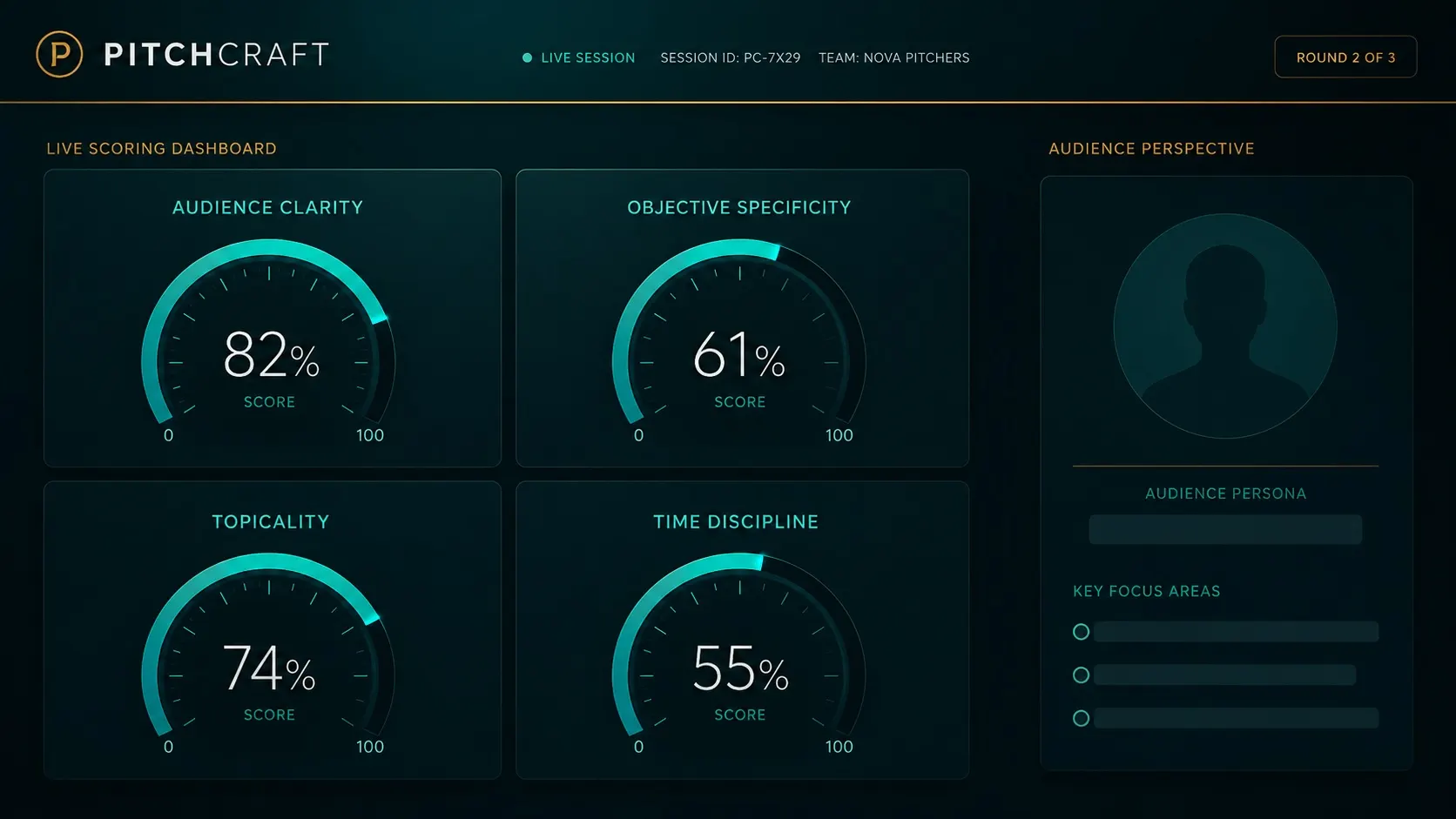
Full scoring rubric — clarity, relevance, call-to-action strength.
Integration
Consequence: Scores on executive clarity.
Consequence: Often runs out of clock before ask.
Owns the arc — time and ask are theirs to protect.
Score using rubric — behaviour, not taste.
Keeps rounds honest; lands transferable rules.
Audience fit
Round-over-round delta
Clarity
One-sentence objective test
Time integrity
Finished inside constraint
A facilitated simulation where participants pitch to varied audience profiles across timed rounds. Each round changes the objective — inform, persuade, or secure a decision — so presenters practise adapting structure, not recycling slides.
Training teaches frameworks; PitchCraft forces application with live feedback and consequence. Participants see how habits — over-explaining, weak asks, ignoring the room — show up under mild pressure.
Managers presenting to executives, sales leaders, internal champions pitching initiatives, and any cohort where 'knowing the topic' is not the same as landing the message.
Book a facilitated session — we'll match group size, format, and outcomes to the right simulation.